Because even one wrong entry can hold up your entire shipment.
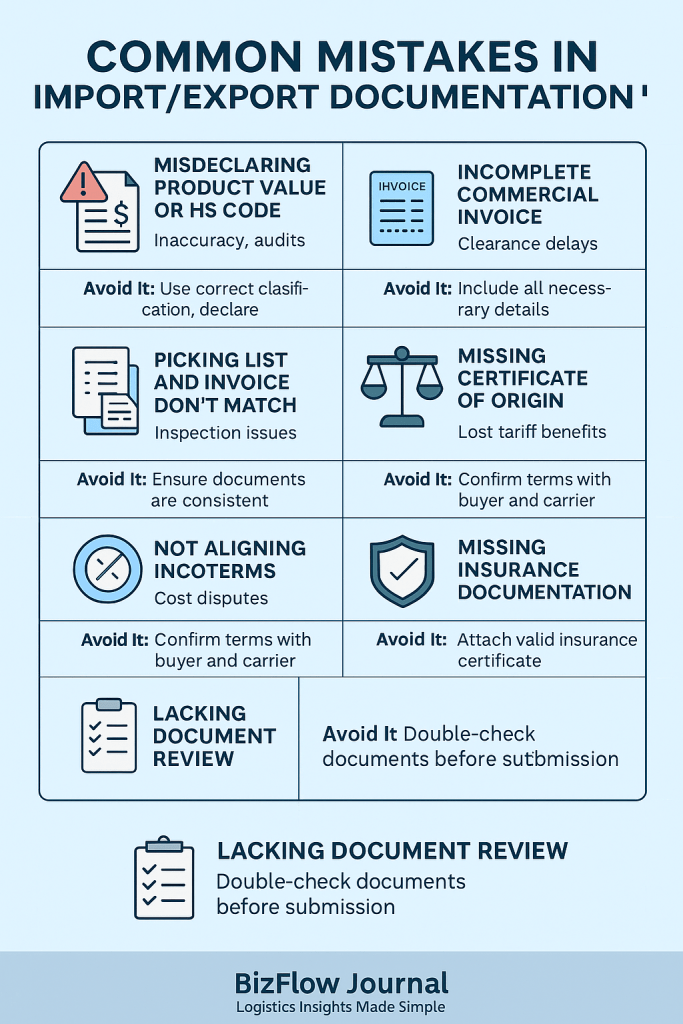
After understanding the essential documents for import/export operations, the next crucial step is learning how to avoid costly documentation errors. A single mismatch in paperwork can cause delays, penalties, or even seizure of goods at the border.
This guide will walk you through the most common mistakes traders make — and how to proactively avoid them.
1. Misdeclaring Product Value or HS Code
The Mistake:
Incorrectly stating the value of goods or using the wrong Harmonized System (HS) code.
Why It’s a Problem:
- Leads to inaccurate customs duties
- Raises red flags with customs, possibly triggering audits
Avoid It:
Always cross-check HS codes using your country’s customs database. Work with your broker to ensure product descriptions and values match your invoice and market standards.
2. Incomplete or Inconsistent Commercial Invoices
The Mistake:
Leaving out key details or using values that differ from the purchase order or packing list.
Why It’s a Problem:
- Delays clearance
- May be flagged as suspicious
- Can lead to incorrect duty assessments
Avoid It:
Include full buyer/seller info, Incoterms, product details, and country of origin. Ensure consistency across all trade documents.
3. Mismatched Packing List and Invoice
The Mistake:
Quantities or product descriptions on the packing list don’t match the commercial invoice.
Why It’s a Problem:
- Triggers manual inspections
- Causes confusion at warehouses and customs checkpoints
Avoid It:
Use the same reference numbers, quantities, and item descriptions on both documents. Review before sending.
4. Missing Certificate of Origin
The Mistake:
Forgetting to include the Certificate of Origin when claiming preferential duty rates under a Free Trade Agreement (FTA).
Why It’s a Problem:
- May disqualify your shipment from reduced tariffs
- Could result in retroactive duties or penalties
Avoid It:
When shipping under FTA terms, always attach a properly signed Certificate of Origin — preferably issued by an authorized chamber.
5. Not Matching Incoterms with Documentation
The Mistake:
Using Incoterms like FOB, CIF, or DDP inconsistently across the invoice, contract, and transport documents.
Why It’s a Problem:
- Creates confusion over who pays for what
- May lead to insurance or liability disputes
Avoid It:
Confirm the chosen Incoterm in all documentation. Everyone (buyer, seller, and freight forwarder) must be aligned.
6. Shipping Controlled Goods Without a License
The Mistake:
Shipping restricted items (e.g., electronics, chemicals, textiles) without the proper export or import license.
Why It’s a Problem:
- Violates trade regulations
- Can result in heavy fines, delays, or seizure
Avoid It:
Check your government’s restricted items list. If needed, apply for licenses well in advance and keep documentation ready at the time of customs filing.
7. Missing or Incomplete Insurance Documentation
The Mistake:
Shipping under CIF or CIP terms without providing an insurance certificate.
Why It’s a Problem:
- Buyer may be exposed to financial risk
- Could void claims in case of loss or damage
Avoid It:
Purchase and attach a valid insurance certificate that matches the commercial invoice and transport documents.
Bonus Tip: Lack of Document Review
Even when you have all the right documents, failing to double-check them can undo everything. Use a simple checklist to review:
✅ Are all values consistent?
✅ Do Incoterms match across documents?
✅ Is the product correctly classified?
✅ Are all documents signed and dated?
Import/export documentation isn’t just paperwork — it’s the foundation of global trade. Getting it wrong can cost more than just time; it can damage customer trust and your brand reputation.
By avoiding these common mistakes, you’re not just complying with rules — you’re building a resilient and professional trade operation.
📌 In logistics, speed is nothing without accuracy
Author: Bhavik Khandelwal
 BIZFLOW JOURNAL
Leave a comment